


I came away from the preview of All Rivers Spill Their Stories to the Sea thinking more horror stories should be set in vast industrial parks, a thin veil of fog setting in off the seafront. There is something deeply unsettling about watching a vast industrial landscape — one that once represented a “land of opportunity” — disappear in a matter of seconds.
In her new documentary about the devastating marine die-offs of 2021, director Jeanie Finlay raises some uncomfortable questions about industry, the environment and the communities caught between them.
Five years after hundreds of thousands of dead crustaceans washed up along the North East coast, the fishermen who lost their livelihoods are still fighting for the truth about what happened, and their story is a compelling and important watch.
Look out for The Teesside Lead’s own Leigh Jones, who has followed this story closely over the last few years, making a brief but notable appearance (And no, he didn’t ask me to say this!).
As a new documentary brings Teesside’s marine die-off disaster back into the spotlight, after five years of investigations, scientific disagreement and political controversy, the fishermen who lost their livelihoods are still looking for answers.
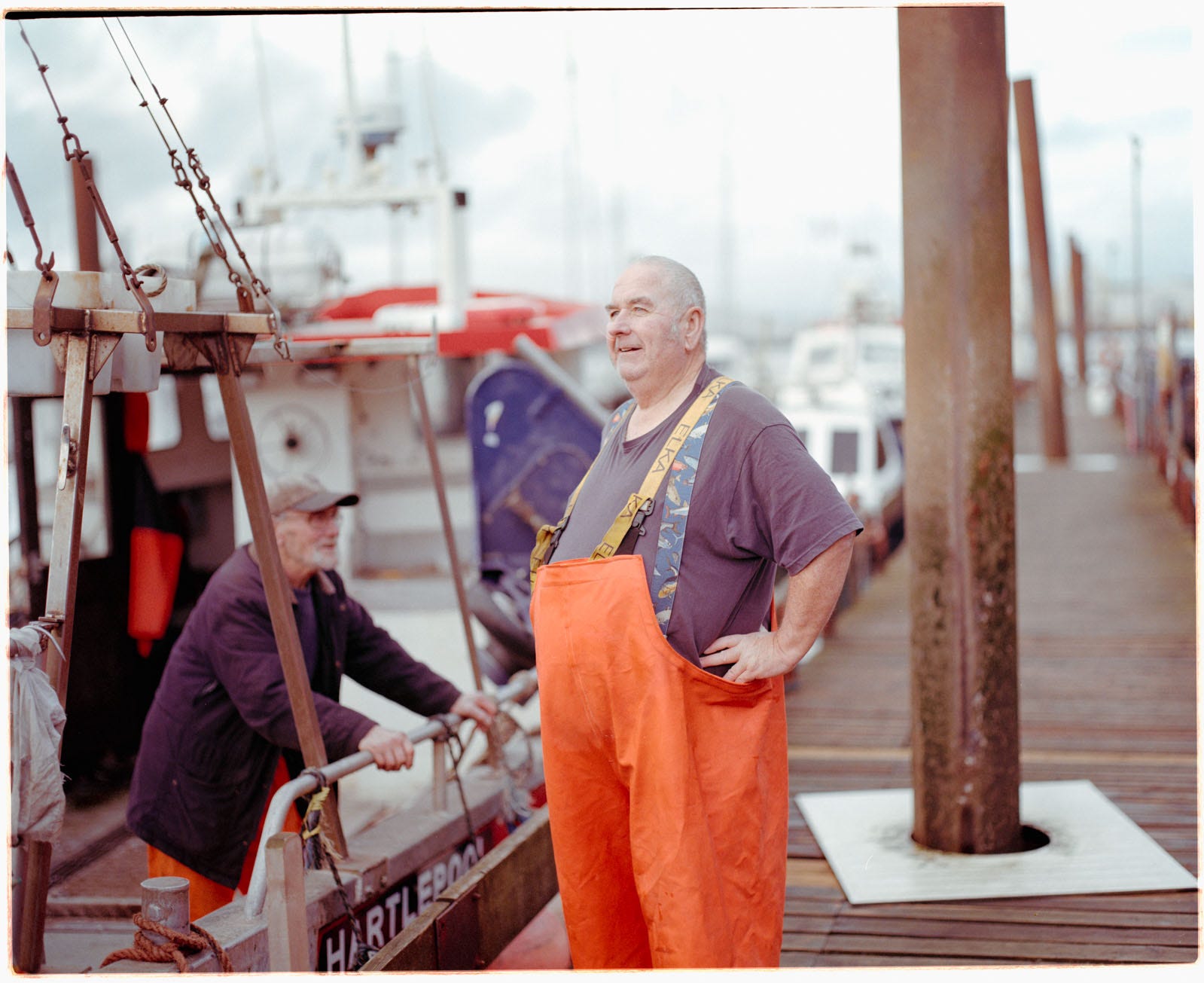
“I’m the luckiest man in the world,” says Hartlepool fisherman Stan Rennie in the opening scenes of All Rivers Spill Their Stories to the Sea.
In his orange rubber overalls, Stan has been casting his lobster pots out along the stretch of coastline for over 50 years, where the mouth of the River Tees meets the North Sea. His fishing boat, Sarah Lynn R, named after his beloved wife and daughter, bobs up and down on the waves, the steel structures of Teesworks towering in the background behind it.
Five years ago, Stan’s livelihood was devastated practically overnight, when in autumn 2021, a mass marine mortality event hit the waters his family has fished for half a millennium.
The new documentary by Jeanie Finlay follows Stan’s ongoing search for the truth behind the die-offs, which, despite the efforts of the North East Fishing Collective, local campaigners, researchers and independent investigations, remains bitterly contested.
As the film is released nationwide in UK cinemas on Friday 23 October, it’s brought renewed national attention to one of the region’s most contentious environmental controversies, the impact of which is still being felt by the local community.
“It’s heartbreaking,” said Stan during a Q&A interview following a preview screening of the film in September.
“Every time I watch the film, it’s a kick in the guts. Five years later, the environment is still on its knees.”
Marine ecocide
In late September 2021, reports began emerging of hundreds of thousands of dead and dying crabs and lobsters washing up on the shore along the Teesside and North Yorkshire coast. A “carpet of death”, was how the front page of the Yorkshire Post described a similar event at Saltburn in 2023.
“People concentrate on the idea that it was just a few crabs and lobsters,” Stan continued.
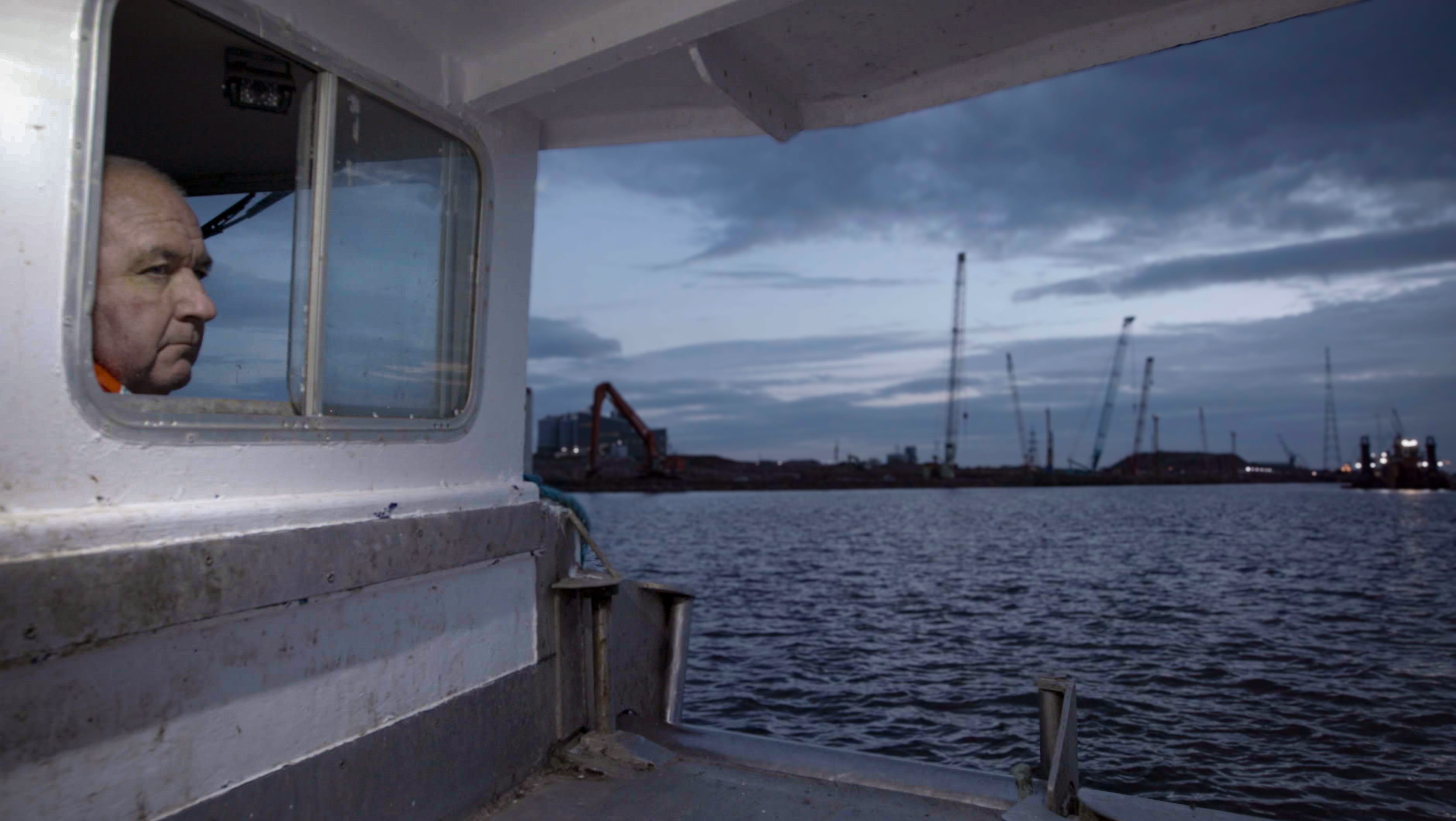
“It wasn’t just crustaceans; it was a marine ecocide. It killed everything, from moss to worms. Five years later, the moss is only just showing signs of growing back.”
In November 2021, the Environment Agency (EA) ruled out chemical pollution as a likely cause, and in 2022, a joint investigation with the EA, the Department for Environment, Food and Rural Affairs (Defra), the Marine Management Organisation and the Centre for Environment, Fisheries and Aquaculture Science (Cefas) identified an algal bloom as the most likely explanation, although it did not establish a single consistent cause.
However, as the documentary explains, the report incorrectly included a photo that Stan himself had submitted to the EA earlier that month — alerting it to a pollution incident involving scrap dust from a boat in the harbour — claiming it was evidence of an algal bloom.
Local fishermen and independent researchers questioned the report’s conclusion and raised concerns the dredging of the river that began taking place around this time may have disturbed historical contaminants in the riverbed.
Teesside’s long history of heavy industry has taken its toll on the local environment.
For decades, the River Tees was central to the region’s steel, chemical and manufacturing industries and nearly two centuries of blast furnace operations —ending with the closure of the Redcar steelworks in 2015 — left behind massive tracts of heavily contaminated brownfield land.
Following the report, Dr John Bothwell, a marine biologist at Durham University, contacted the North East Fishing Collective and helped them raise £30,000 to undertake an independent scientific investigation.
This research, led by Newcastle University’s Dr Gary Caldwell, examined the possible role of pyridine, a chemical once used for cleaning in the steel factories, demonstrating that it could cause severe effects, including seizures and total paralysis in crabs.
The investigation also examined how contamination might travel along the coastline, arguing their findings were consistent with aspects of the reported die-offs.
In 2022, the government commissioned an independent expert panel to review the available evidence after Stockton North MP, Alex Cunningham, challenged the findings of the Defra report in Parliament.
The report was carried out remotely - with no one from the panel visiting Teesside - over around four weeks which included the Christmas period. Its findings, published in 2023, concluded an unidentified novel pathogen was the most likely explanation, but found no direct evidence of such a pathogen.
The panel also considered chemical pollution and maintenance dredging to be unlikely causes — something which is disputed by Caldwell and researchers from Newcastle, Durham, Hull, and York universities, who argued the evidence was more consistent with some form of pollution, likely the disturbance of historic sediment, potentially linked to dredging.
The land of opportunity — for whom?
The imposing shadow of Teesworks, and the promised ‘land of opportunity’ looms large in the background, both literally and figuratively throughout the documentary, as the community considers whether the sins of the region’s industrial past have come back to haunt the present.
In unsettling scenes, enormous structures collapse into clouds of dust, across a landscape which once represented opportunity and promise, now blown into oblivion in a matter of seconds.
On 19 September 2021, the Dorman Long tower, which had stood nearly 200-feet-tall over Middlesbrough’s South Bank for decades. The brutalist concrete coal bunker was an emblem of Teesside’s long history of steelmaking. It was reduced to rubble in the largest explosive event since World War II.
The tower, part of the Dorman Long steelworks, which famously created the Tyne Bridge and the Sydney Harbour Bridge in Australia, had been granted Grade II listed status by Historic England just weeks before, after campaigners highlighted its historical and architectural significance.
But Tees Valley Combined Authority (TVCA) won an appeal to the Department for Digital, Culture, Media and Sport. New secretary of state, Nadine Dorries, gave permission to flatten the tower within days of her appointment to the role.
The major demolition programme at the site, which began in 2021 — described by TVCA as “the UK’s most complex demolition programme” — was completed in three years rather than the seven initially expected.
Reports of the first marine die-off came just days after the Dorman Long tower fell.
‘A lack of curiosity’
Tees Valley Mayor Ben Houchen has championed the Teesworks redevelopment, promoting it as one of the region’s most significant regeneration projects, with plans to attract new industries and create hundreds of jobs on the former steelmaking site.
In July 2022, he acknowledged the original investigation had not provided a satisfactory explanation, and speaking to ITV Tyne Tees in January 2023, said he had sought support for affected fishermen, while also warning that the controversy had delayed investment in the Teesside Freeport.
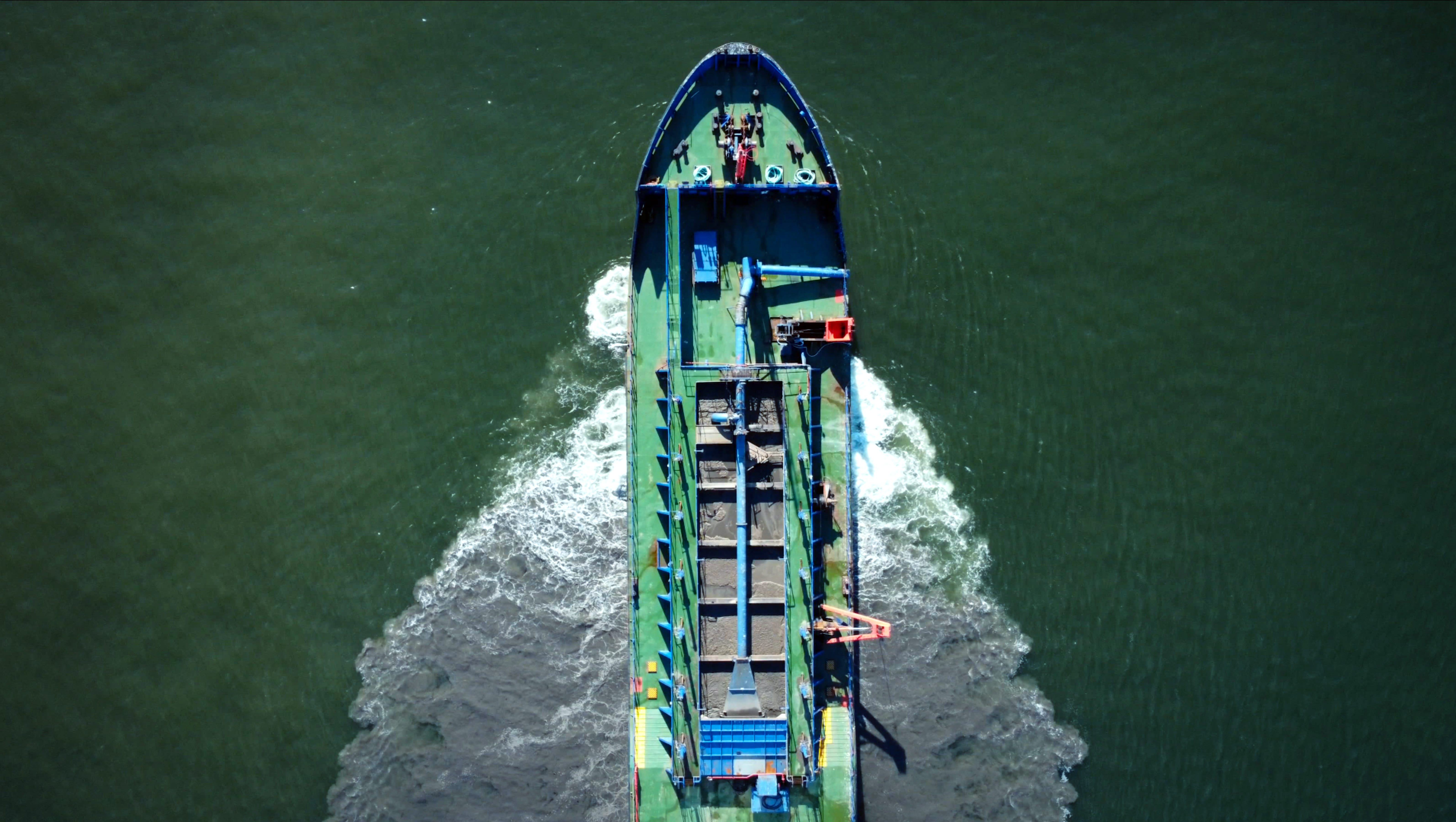
However, speaking at the film’s preview, Stan said a meeting between Houchen’s representatives and the North East Fishing Collective had failed to resolve their concerns.
Nor did he respond to an invitation to provide evidence for the final report of a cross-council working group examining the crustacean deaths records.
Finlay says she made a choice not to reach out to Houchen for an interview while making the documentary.
“I thought it was really important to make a film from Stan’s point of view,” she explained.
“I wanted to show what it’s like to be ignored, what it’s like to be blocked. If you haven’t got a direct line of communication with the Mayor of the region where you live, what other information are you getting? There are complex causes here and a lack of curiosity.”
Last week the government announced it would launch a statutory investigation, following years of questions about the financial governance of TVCA, the Teesworks regeneration scheme, and Teesside International Airport.
The investigation was ordered by Jim McMahon, Minister for Local Government, Devolution and Growth, who also appears in the documentary, meeting with Hartlepool fishermen as former Shadow Environment Secretary in 2023.
The men he meets are visibly broken, financially and emotionally, but for them, this was never just about the money.
“Not once have the guys I’ve grown up with, the guys who’ve lost their jobs and lost their boats, asked for a penny,” Stan said.
“If we were offered compensation, or the chance to save the environment, we’d choose the environment.”
“The fight goes on”
The North East Fishing Collective has continued to challenge decisions relating to dredging and marine protection in the region.
In 2025, the group brought a legal challenge against the Marine Management Organisation (MMO) over a 10-year dredging licence for the River Tees. The MMO accepted that the licence had been unlawfully granted and that the decision required reconsideration.
The group is now seeking to raise £100,000 to continue funding independent research, investigations and legal challenges, as well as a reserve to enable scientists to respond quickly if further marine deaths are reported.
In Falmouth, Cornwall, campaigners opposing proposed dredging as part of a £150 million docks redevelopment have drawn parallels with the events on Teesside. A community screening of the documentary was organised with representatives of the local Stop the Dredge campaign invited to discuss the proposals.
“We want to make sure the dumping of toxic material at sea doesn’t happen, and that better testing and procedures are in place,” Stan said.
“Not just for Hartlepool and the Tees, but nationally.”
Finlay is also pressing for the film shown to MPs in the House of Commons.
“The thing about a film is that it can be like a squeaky wheel and remind people that this is important and needs attention,” she says.
“This isn’t fixed. It isn’t history. The hurt goes on.”
Stan, who we see struggling with his health in the documentary after being diagnosed with end-stage liver disease, is still optimistic that their efforts can lead to lasting change and prevent similar disasters in the future.
“Through my illness, most days I’m laid up, but I won’t be beaten down over this,” he said.
“It’s humbling, the amount of support that people have given us.”
This gets to the heart of what Finlay wants us to take away from her David and Goliath-esque tale: the power of community.

“I kept thinking about all the different communities that use the sea,” Finlay said, reflecting on when she first had the idea for All Rivers.
“The sea swimmers, the fishermen, the men’s sheds, the lemon-top ice cream places — all these pieces make up a community. I wanted audiences who haven’t been to the North East to understand what makes it so special.”
As Dr John Bothwell, who Finlay interviews in the documentary, says — perhaps it’s time to start trusting these communities more, and actually listening to the knowledge and experience they have collected over generations of fishing, swimming, and living alongside the North Sea.
“The North East doesn’t count to Westminster, “ added Stan.
“But we’re proud people. The fight goes on.”
All Rivers Spill Their Stories to the Sea is showing in cinemas around the UK and is out now.
The whole thing has always reeked of corruption
The fishermen and population deserve so much better but Teeside SEZ is sewn up by profit seeking bad actors acting with full government support in their pursuit of even more taxpayers money. Ben Houchen is a prime example. I didn’t realise Nadine Dorries had overridden the preservation order for the demolition of the structure. That was pretty disgusting.