


The Bureau of Investigative Journalism does incredible resource-heavy investigations into all sorts of subjects. They’re real leaders in the craft of this job. They’re responsible for the unbelievable investigation which revealed a man who’d pocketed £130m in taxpayer funds from Thurrock Council.
It makes Tees Valley look like an example of good governance.
Last week they published data on an England-wide investigation into council spend on children’s care. They’ve shared the data with The Teesside Lead, and today’s edition builds on that original work from them to look in-depth at what’s happening here.
If you want to support this sort of in-depth research and journalism focusing on the Tees Valley, the easiest way is to get us straight to your inbox for free. The next-easiest way is to share our articles, and talk about us online.
For those of you who are able to, a paid sub gets you full access to our work and stories. To celebrate our second birthday this month, there’s a 20 per cent discount for new paid subs on an annual subscription. Click here to get the discount!
Thanks as always for reading.
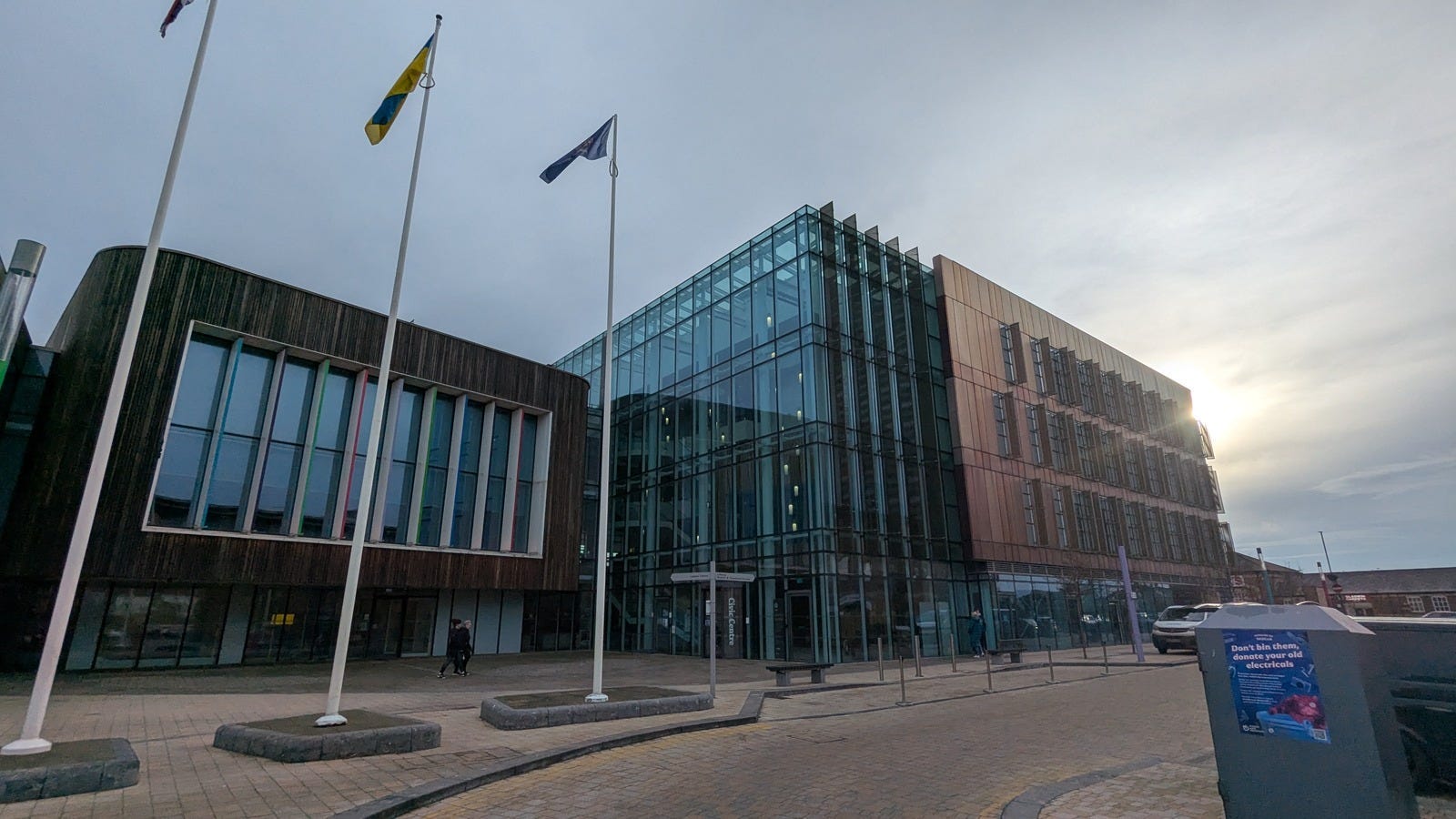
Data obtained as part of an investigation by The Bureau of Investigative Journalism has revealed Teesside councils spent almost £20 million placing children in unregistered care settings over the last two years.
The figures, accessed under the Freedom of Information Act and shared with The Teesside Lead, show that Redcar & Cleveland spent £16.4 million on agencies working with unregistered care providers in 2024-25.
This was almost five times higher than neighbouring Middlesbrough, which spent £3.5 million during the same period.
The findings were first published as part of a national investigation by TBIJ into the scale of England’s illegal care industry. Payment records obtained from councils across the country revealed that hundreds of businesses are running children’s homes that are not registered with Ofsted.
Redcar & Cleveland Borough Council spent the third highest amount in England, behind Nottinghamshire County Council (£16.8m) and Kent County Council (£27m).
Providing care and accommodation to a child in a setting that is not registered as a children’s home but should be, is an offence, and these are not subject to the same regulatory oversight and routine Ofsted inspections as registered settings.
Even so, TBIJ identified more than 480 private companies, and around £250m spent on 1,800 placements between 2024-25. Nearly half of the local authorities did not respond to the FOIs, meaning the actual figure could be much higher.
Between April 2025 and March 2026, Ofsted opened 850 cases concerning potentially unregistered children’s homes and supported accommodation. It determined that 710 of these should have been registered, while 120 cases remained unresolved.
Where did Teesside’s £20 million go?
The full data and responses from Redcar & Cleveland and Middlesbrough — the only two Tees Valley councils included in the report — have now been shared with and independently analysed by The Teesside Lead. There is no data for Darlington, Hartlepool or Stockton-on-Tees councils.
The data reveals large sums being paid both to businesses directly providing care and to recruitment agencies supplying staff for children living in unregistered settings.
In Redcar, just four providers — Protective Care Group, Prospero Health and Social Care, Minerva/Forever Care and Thornbury — accounted for almost £13 million, or around four-fifths of the £16.4 million total expenditure.
Records show that in 2024, the council spent £1.4m with private care staffing provider Thornbury for the placement of a single child, and a further £1m in 2025. Middlesbrough, by comparison, recorded a payment of £417,524 for one placement related to Thornbury.
Redcar spent a further £3.7m with the recruitment agency Prospero Health and Social Care, accounting for roughly half of the £7.6m TBIJ identified spent nationally with the company.
Meanwhile, payments to Sunderland-based Minerva/Forever Care rose from £1.29m to £1.51m, despite the number of recorded placements falling from 13 to six.
Redcar & Cleveland Council said unregistered settings were only used when no suitable registered placement was available at the point a child urgently needed somewhere safe to live, particularly where children had complex needs or accommodation was needed at short notice.
It added that any temporary unregistered arrangement is subject to “assessment, management oversight and regular review” and where a child is living in an unregistered setting, it will continue searching for a suitable registered placement and move them “as soon as an appropriate option becomes available”.
In Middlesbrough, more than £1.7m went to the healthcare recruitment agency Bleep 360 over two years, with payments rising from £754,000 in 2024 to £956,000 in 2025, despite the number of recorded placements falling from six to four.
Spending with Unite Care and Support Services also rose from £165,000 across three recorded placements in 2024 to £809,000 across six in 2025.
Middlesbrough Council said where local provision is unavailable, or where a child’s needs are particularly complex, the Council may be required to source specialist placements from independent providers in order to meet its statutory responsibilities.
It said all placement decisions were subject to management oversight and financial scrutiny, with processes in place to review their suitability, quality and cost.
Neither council provided specific explanations for the higher figures, such as how long the arrangements lasted or what level of staffing was provided.
Middlesbrough pointed to occasions when arrangements are made to support a child in alternative accommodation with “intensive staffing arrangements” where it is considered necessary to “safeguard the young person” and no suitable registered placement is immediately available.
Recruitment agencies like Thornbury and Prospero argue that they only supply the staff, and do not operate or manage children’s homes. Ofsted has said that both the local authority that arranges the placement, and the agency that provides the workforce may be liable.
A spokesperson for Thornbury told The Teesside Lead that they couldn’t comment on individual care packages. “We provide specialist healthcare staff and care support, often at short notice and in highly complex situations where an individual’s needs require carefully planned specialist support. We comply with all relevant laws and regulations.”
They added: “Responsibility for accommodation and placement decisions sits with the relevant local authorities and other commissioning organisations”.
Safeguarding concerns
The TBIJ investigation also revealed that seven of the 14 councils it identified as paying Prospero in connection with illegal placements reported safeguarding complaints concerning its workers. Councils reported at least 44 allegations between January 2024 and April 2026, of which 16 were upheld.
Prospero told TBIJ that an upheld concern does not itself establish that a young person was harmed and said workers undergo enhanced criminal-record checks and mandatory safeguarding training.
Redcar also spent almost £4m on seven placements with Protective Care Group (PCG), which was reported to have employed former soldier Liam Ramsey at an unregistered home operated by the company, despite having a number of previous criminal convictions. Ramsey had neglected a child while working for PCG, and later went on to work for MAP Adventures, where he sexually assaulted a child in his care with another care worker over four hours at an unregistered home in Durham after they gave her alcohol and cocaine. He was jailed in 2025 for 11 years.
In a separate investigation by TBIJ, PCG — which has changed its name to Nova Care Group — was accused of failing to notify the Disclosure and Barring Service (DBS) of previous incidents of neglect involving Ramsey and providing false references.
The symptom of a “broken” national social care system
Under the Children Act 1989, councils have a statutory duty to provide any child in their care with appropriate accommodation. But in its annual report 2024-2025 Ofsted found that 91 per cent of local authorities it surveyed often struggle to find suitable homes for children with complex needs. In 2023-24, councils told Ofsted that in 78 per cent of potential unregistered-home cases, the reason for the placement was that they couldn’t find a suitable registered home.
Reports submitted to Middlesbrough’s Children’s Scrutiny Panel in January 2026 highlight ‘sufficiency gaps’ in local authority-run foster homes and residential facilities as a reason for councils relying on external private providers.
The council said the national shortage of registered residential placements, increasing demand for specialist care, and rising provider costs had contributed to “substantial increases” in placement costs and could limit the options available when urgent placements were required.
“Our overriding responsibility is to safeguard vulnerable children and ensure that they receive the support, stability and care they need. Any placement arrangements are made with this responsibility at the forefront of decision-making,” Councillor Luke Henman, Middlesbrough Council’s Executive member for Children’s Services, told The Teesside Lead.
“Councils across the country are often left with no option but to look outside registered provision to support a child - this is a symptom of a broken social care system nationwide.
“In Middlesbrough, we place children and young people in homes that are not yet registered only where it is absolutely necessary and where we are assured appropriate safeguards are in place.”
Meanwhile, a 2025 Ofsted inspection report examining Redcar & Cleveland’s children’s services identified that “historical decisions to close children’s homes have created a legacy of insufficient in-house provision” and resulted in an “increased, and relatively high, use of unregistered settings”. The report noted that the council is seeking to address the “current insufficiency” of placements, but this “will take some time to achieve”.
In the current financial year, 65 per cent of Redcar & Cleveland’s expenditure is on its statutory duty to support vulnerable children and adults.
The authority said it now had a “clear commitment” to increasing registered in-house childcare provision to reduce the need to use “outside bodies”. It is also working with the other North East councils in a “sustained campaign” to increase the number of available foster homes.
‘Profiteering off the backs of vulnerable children’
The substantial variations in payments to these external providers, also raises questions about how costs are being assessed and scrutinised, in a market where demand for specialist placements outstrips supply.
The Competition and Markets Authority’s children’s social-care market study 2022 found that the largest private children’s-home providers were making “materially higher profits and charging materially higher prices” than it would expect.
Its analysis of 15 large providers found children’s-home operators recorded average operating profit margins of 22.6 per cent between 2016 and 2020, and concluded that “competition is not working as well as it should be”.
Ofsted’s annual report for 2025 also raised concerns about “strong profit motive” in the sector and “profiteering off the backs of vulnerable children”. The watchdog said the lack of places for children needing specialist support, had created what it described as a “shadow market”.
Prospero Group Holdings, whose health and social care arm received £3.76m from Redcar & Cleveland across 45 recorded placements in the data analysed by The Teesside Lead, reported revenue of £90.9m in the year ending June 2025.
This was down £25.3m from £116.2m the previous year, while gross profit also fell £8.8m, from £32.7m to £23.9m. Despite that fall, dividends paid by the company more than doubled, increasing from £1.37m in 2024 to £2.98m in 2025.
Middlesbrough Council said it has established processes for reviewing the suitability, quality and cost of placements and “seeks to achieve value for money” whilst ensuring that children’s assessed needs and safety remain the “primary consideration”.
Decisions are not based “solely on cost”, but on securing the “right placement for the child at the right time”.
Redcar & Cleveland council rejected any suggestion that it was knowingly placing children at risk.
