


As a major sewage leak in the River Tees last week resulted in a no-swim notice all the way down the coast, I reached out to campaigners from Surfers Against Sewage to get their take.
What I thought was one story—about sewage spills the public knows about — took a turn when campaigners told me the bigger issue is actually the pollution risks we aren’t alerted to.
I put these concerns to the Environment Agency and Northumbrian Water, and found myself taking a deep dive into what goes on when it comes to the monitoring and reporting of pollution to the public — and where data and transparency is still lacking.
In the first of what will be a series of articles looking closer at the challenges facing the River Tees, I attempt to break this down in the full story below.
A major sewage spill into the River Tees after a burst main saw swimmers warned not to bathe at popular dipping spots all down the coast, while Northumbrian Water worked to remove “several thousand tonnes worth of material” from the top of the pipework.
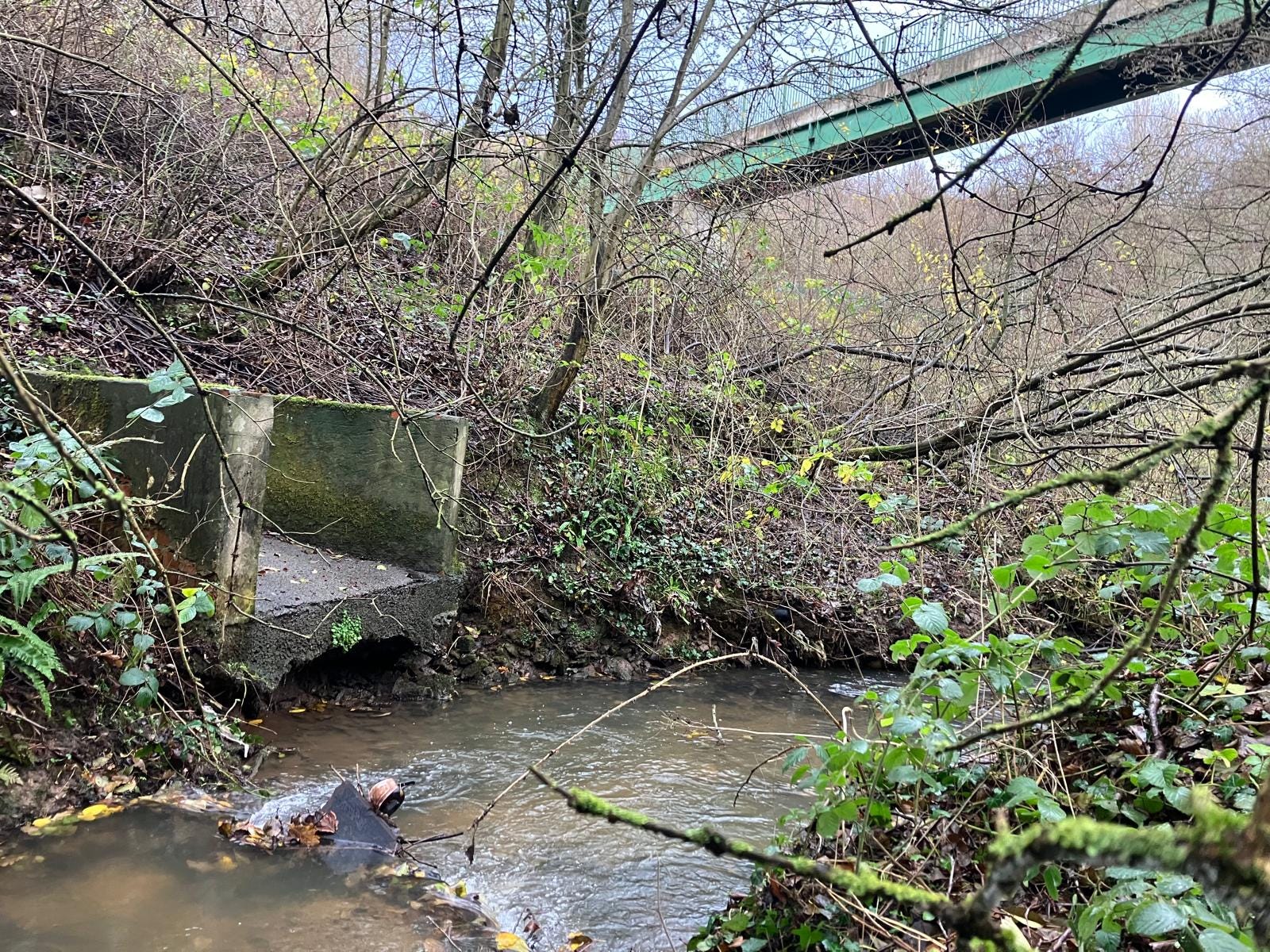
It led to the Environment Agency issuing a pollution alert for the whole of Tees Bay, and a no-swim notice issued on Sunday 29 June —after the pipe was reported to have burst on Friday 26th— which remained in place until Tuesday 7 July.
In a statement, Northumbrian Water said the damage caused to its Cargo Fleet Lane sewage main was “likely” to have been caused by a third party and inquiries are ongoing.
National figures suggest the water company spilled sewage into the UK’s waterways more than 27,760 times in 2025, for a total of 123,521 hours.
But following recent reports of ‘raw sewage’ in the sea at Saltburn, swimmers falling ill, and ‘visible foam’ floating down the River Tees, campaigners told The Teesside Lead that the bigger concern may actually be the spills that the public doesn’t know about.
Muddying the water
Storm overflows are licensed to discharge sewage periodically, and since 2025 water companies have been required to install Event Duration Monitors (EDMs) at these locations to publish near real-time data, including the location, duration and recent history.
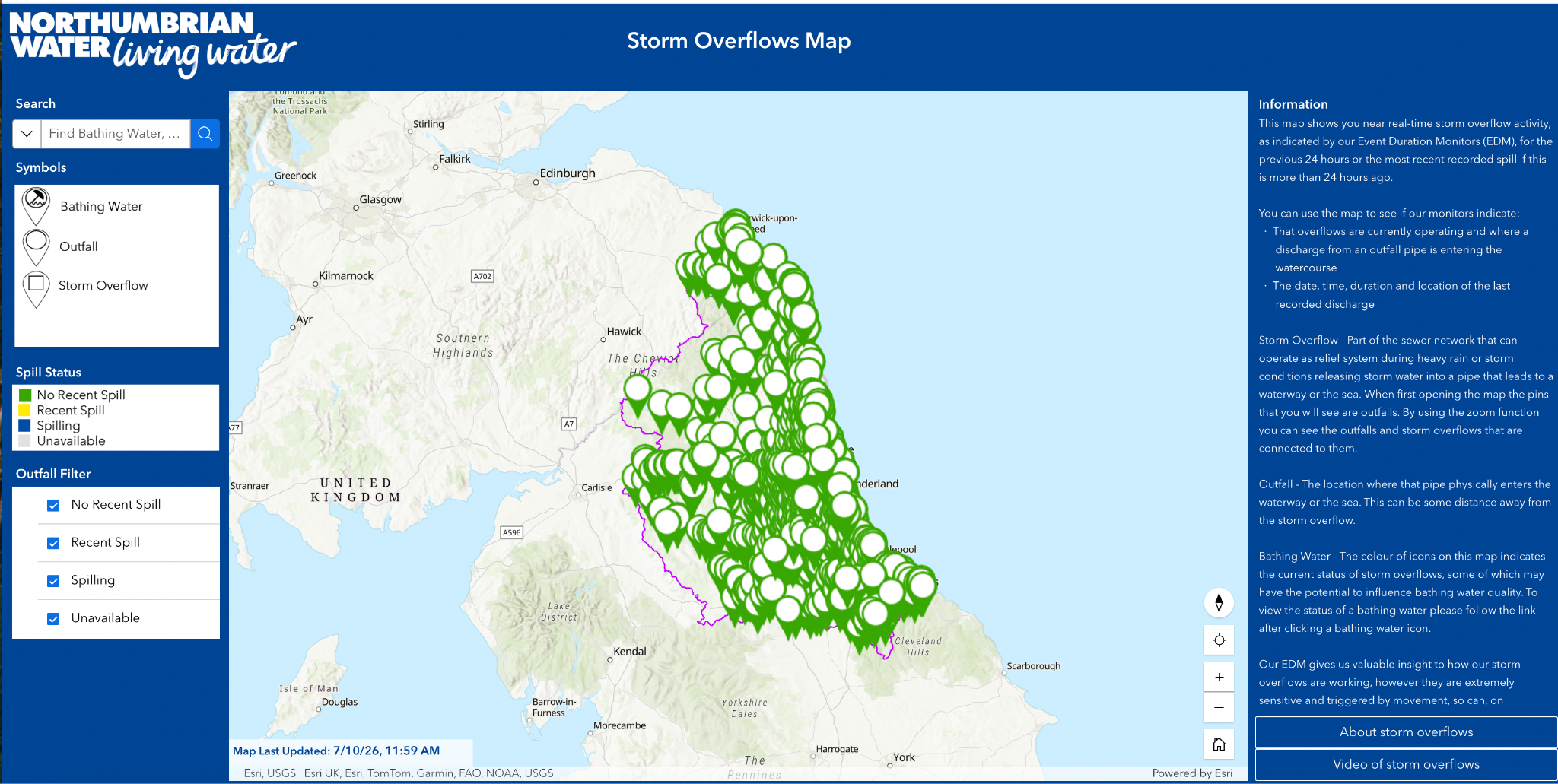
Northumbrian Water said the number of storm overflow discharges in the region has reduced by over a third, down from 40,792 in 2024, with the duration of spills decreasing by 50%.
According to John Reeve, of Surfers Against Sewage Saltburn, there are “major holes in the data” and current monitoring and public information systems don’t always give residents a complete picture of pollution affecting the region’s rivers and coastline.
The organisation monitors spills through its own database, which is fed by data taken directly from the National Storm Overflow hub (NOSH).
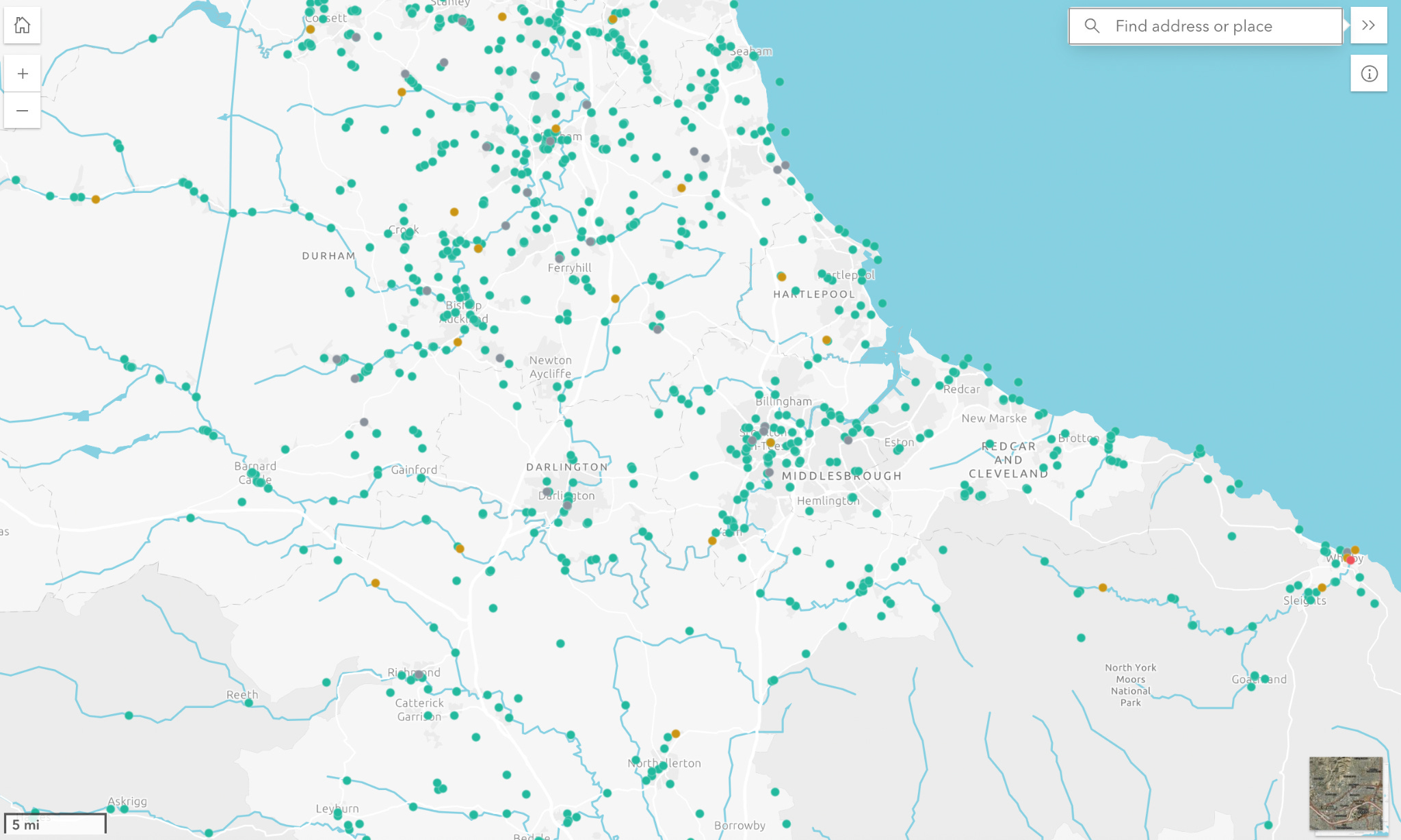
“We’ve already demonstrated locations where monitoring systems weren’t accurately recording what was happening,” Reeve tells Teesside Lead.