


In case you missed it, The Teesside Lead is celebrating its second birthday in its current format as a newsletter. To celebrate you can now get 20 per cent off the price of an annual subscription. The offer is only available until the end of September, so don’t wait, click here if you want to take advantage. You only have three days left!
It means you can get full access to the work we do for £39.20 a year instead of £49. That works out at 75p for each regular Sunday edition of The Teesside Lead.
If you can’t (or don’t want to) pay, we’ll continue doing the (award-winning) work we do, but please help us out by signing up for the free version, and sharing links to our work when you can. As I mentioned, nobody else is doing work like this on Teesside, and we’re journalists, not social media marketers, so word of mouth is crucial. If you like us, tell people!
Thank you so much to everybody who’s supported our work over the last two years. Journalism can be a lonely old endeavour sometimes - you click publish and the article you’ve spent weeks working on just vanishes, but seeing a story get shared, spoken about, and make a difference is an incredible reward.
This week’s edition is a guest post from Tasmin Lockwood, looking into a potential growth area for industry on Teesside - carbon dioxide.
The carbon capture and storage project planned for Net Zero Teesside would see carbon captured at the source its emitted, but there are novel technologies being developed to suck that carbon directly out of the atmosphere.
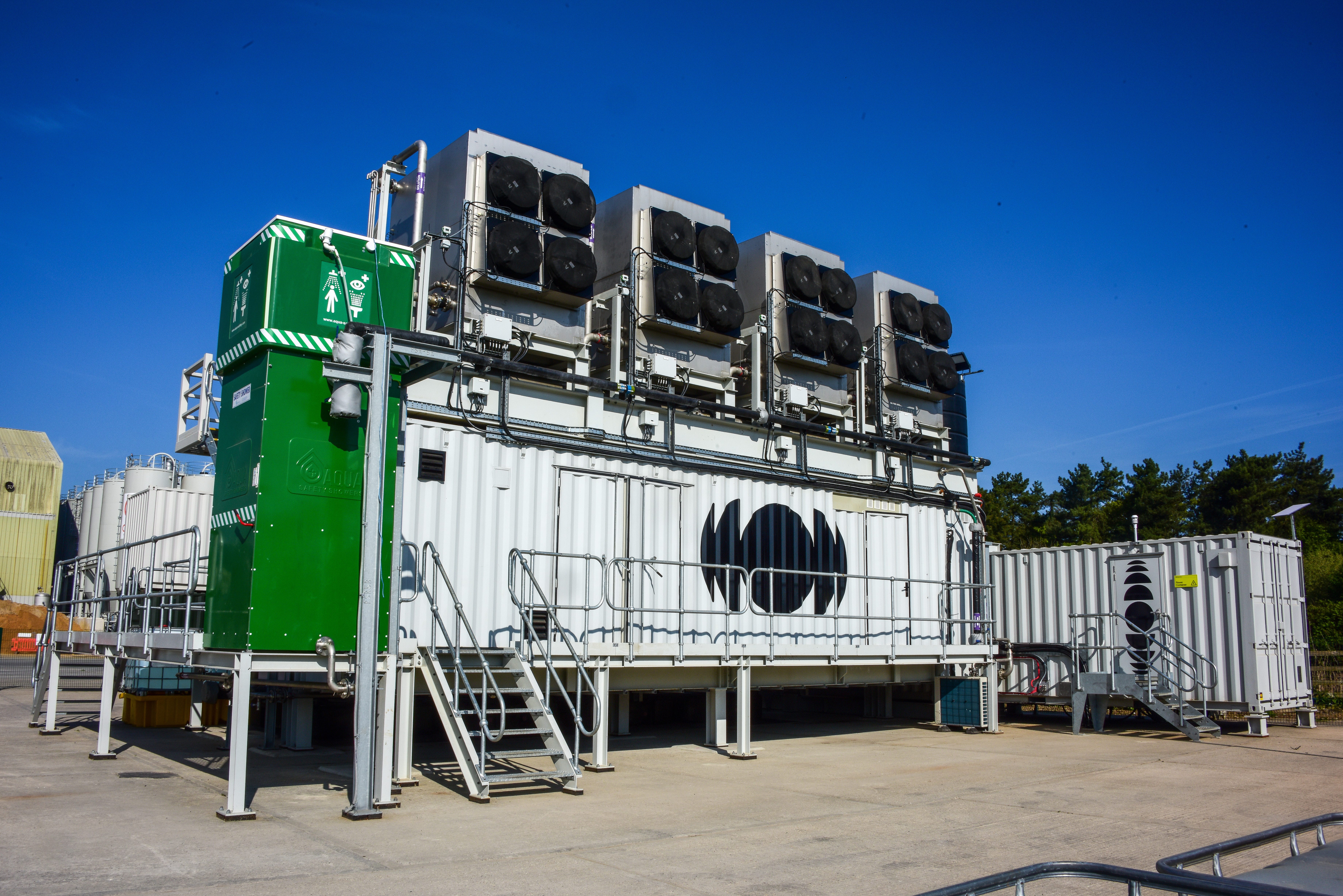
The old Middlehaven docklands lie beneath Middlesbrough College, making it an apt setting for the launch party of a planned direct air capture (DAC) project, part of a wider initiative to reindustrialise Teesside.
UnionDAC hopes to suck its first tonnes of CO2 out of the atmosphere by 2030 and reach full scale — up to 60,000 tonnes per year — by 2032. The project is a joint venture between Progressive Energy, Airhive, and Mission Zero Technologies. Some 980 million tonnes of DAC-driven carbon removal is needed annually by 2050 for the world to stay aligned with the Paris Agreement, according to the International Energy Agency.
The project likely would sit alongside Net Zero Teesside, tipped to be the world’s first commercial-scale gas-fired power station with carbon capture technology, generating up to 742 MW of electricity, or the equivalent of one million homes, and capturing two million tonnes of CO2 a year.
Business leaders and politicians have long promised to reindustrialise the north east, but execution has fallen short. BP spearheaded Net Zero Teesside but has since rolled back its climate commitments and could sell off some of the project, having already ditched its two local hydrogen projects. Teesside’s long-promised hydrogen cluster is thin on the ground and, to the north, Blyth’s promised battery gigafactory, Britishvolt, collapsed before ground was even broken. That site will now be used for an enormous AI data centre.
Gary Potts saw the effects of this first-hand as the previous principal at Northumberland College, which already had apprentices for Britishvolt when plans crumbled. Now the deputy principal of skills and partnerships at Middlesbrough College, Potts works with businesses to build curriculums and train students with the skills businesses need.
“We’re not training anybody up on a UnionDAC course to get a job specifically,” he said, noting carbon capture skills are really process engineering with sector-specific “nuance” bolted on.