

What's happening with council tax in the Tees Valley?
A council-by-council look at how much it's going up


It’s the time of year when councils set their budgets, and this week saw three councils in the Tees Valley approve their budgets, and a fourth decide to make the decision at a later date after arguing for more money from the government. The fifth and final council votes on their spending plans next week, but the recommended increase has already been revealed.
If you want to support independent journalism covering the Tees Valley region, please subscribe to The Teesside Lead, it’s free!
I’ll be back with more on Wednesday, feel free to get in touch at teesside@thelead.uk or via Bluesky.
Leigh
Alison Barnes won the Zetland by-election and will join her Liberal Democrat colleagues on Redcar and Cleveland Borough Council.
The contest saw controversy after Reform UK pulled its backing of its candidate Mike Manning following the revelation of racist social media posts.
Barnes won 50.5 percent of the votes, with Labour in second with 21.6 percent and Reform at 13.5 percent. The Green Party and Conservatives each won 7 percent, with the Greens edging ahead of the Tories.
Turnout was 27 percent.
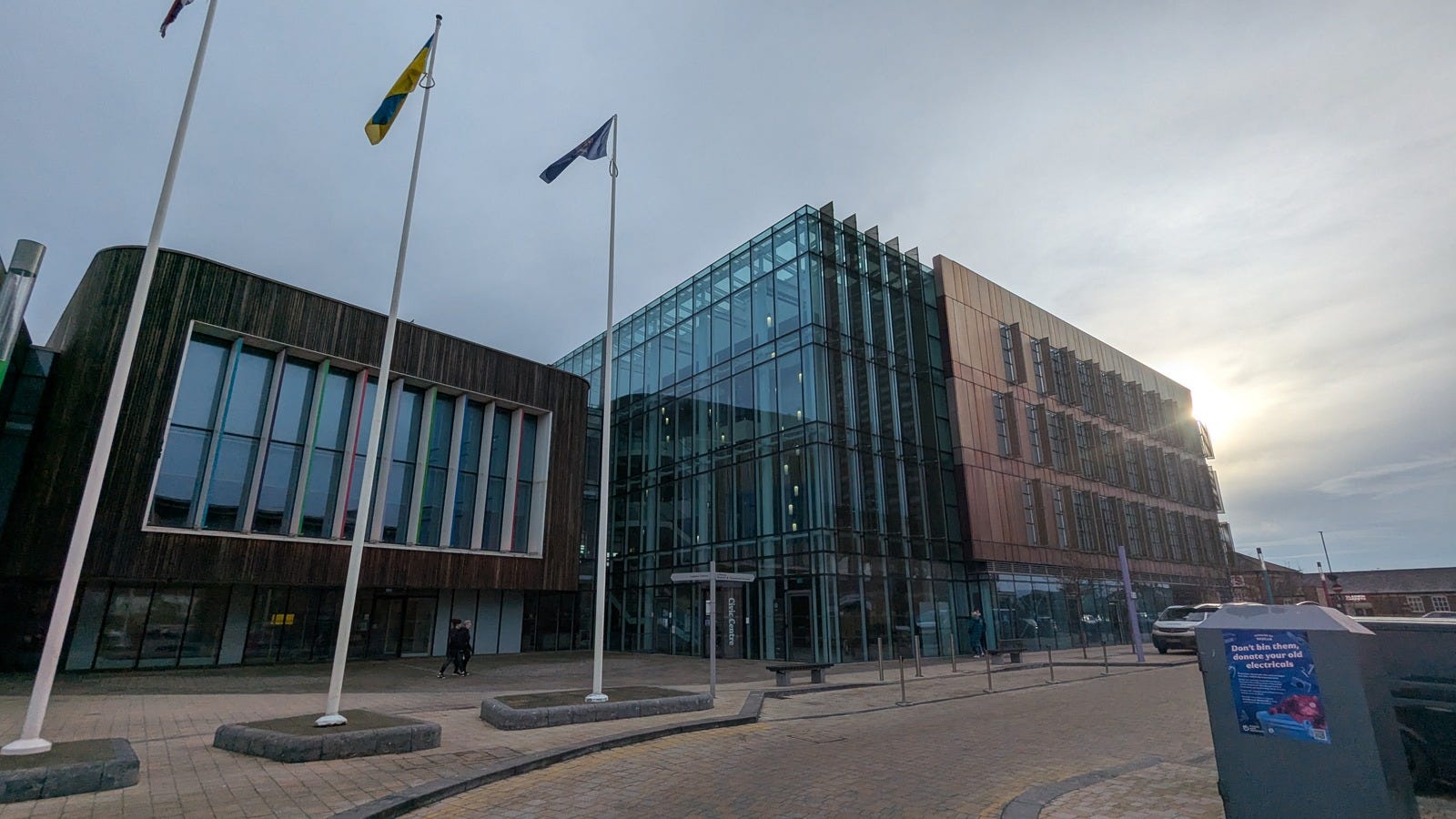
What could be surer than grass being green and the Pope being Catholic? Council tax increasing every year, of course! Here’s how things look for 2026-27 for council tax payers in the Tees Valley.
Last week saw decisions made at three of the region’s five local authorities on the local tax, with Hartlepool deferring their budget decision, while Redcar and Cleveland council is set to vote on it this coming Thursday.
By law, local authorities cannot increase council tax by 5 percent or more without holding a local referendum on the issue, which is why you see increases of weird amounts each year. For instance, Darlington Council is increasing council tax next year by 4.99 percent.
They plan to make £13m of cuts over the next four years, which includes £3m in the forthcoming financial period. They’ll make the cuts through “back office efficiencies and energy savings”.
Steve Harker, Labour’s council leader, said: “When we campaigned to win the 2023 elections we said we would tackle the £7.5 million annual overspend left by the Tories.
“This budget does just that, balanced over the whole four years.
“It brings to an end the Tory era of massive overspending every single year. It is still challenging, but a significant moment nonetheless.”
The council says Darlington has the second-lowest council tax rate in the North East.
Councillors in Stockton voted through their budget for next year with an increase of council tax of 4.95 percent.
Wednesday night’s meeting saw clashes in the council chamber as Tory councillors accused the Labour administration of creating an “unfair” and “irresponsible” budget to vote on.
Labour’s Paul Rowling, the deputy council leader, said they had to make “difficult and unavoidable choices”. The authority’s total spend next year will total £293.5m, with three-quarters of that figure to be spent on social care, special educational needs or disabilities (SEND) and community transport.
In Middlesbrough there was near-unanimous support for the council’s spending plans for next year, which include only a 2 percent increase in council tax. Only three councillors voted against the budget, with 37 supporting it.
Total spend will total just over £200m, and includes pots for improving equipment in playgrounds, as well as a brand new free pest control service. Great news for residents in the town who have long been battling rodents.
Redcar and Cleveland Borough Council are due to decide their budget in a council meeting on Thursday in a meeting straight after the Cabinet confirms its spending plans.
Proposals include a 4.99 percent increase in council tax. The council also intends to borrow £18.4m in order to balance its books. It comes after making more than £20m in cuts to spending over the last four years. The council describes cost pressures in children’s services as “particularly acute”. It says it has the fifth highest number of children in care nationally.
Hartlepool took a radical step during their budget meeting last week and decided not to vote on their budget, as they believe the new funding settlement for local authorities - decided by the Labour government - isn’t fair.
Labour council leader Pamela Hargreaves moved to defer the decision to allow councillors to “take our case once more to Whitehall” to “fight for our borough and our children”.
“I am devastated because the Labour government we were promised would stand up for us has failed us,” she said at the meeting.
“I do not believe it is right that we respond to this injustice by raising core council tax.”
Council tax is a core issue for the politicians of Hartlepool. And Hargreaves doesn’t have to work very hard to “take the case to Whitehall”, as her husband is Hartlepool MP Jonathan Brash, who is chair of the all party parliamentary group for council tax reform.
The famous argument is that people in Hartlepool pay more in council tax than people in Westminster - one of the wealthiest boroughs in London. Because the levy is calculated on the value of a property in 1991 it means somebody who lives in a home that’s now worth £150,000 in Hartlepool pays more than somebody who lives in an £8,000,000 home in Westminster.
The government’s new funding settlement for councils is based on the supposition that they all increase council tax by 4.99 percent each year over the next three years of funding, but Hartlepool’s Labour councillors pledged to freeze the tax, meaning the new funding settlement doesn’t have the same impact in Hartlepool as it does elsewhere.
Ms Hargreaves confirmed a meeting with Secretary of State for Housing, Communities and Local Government Steve Reed has been confirmed to discuss the issue.
During the council meeting she said: “So tonight we say no. We say no to being ignored, we say no to being treated as an afterthought and no to an unfair taxation system and a process that finds money elsewhere but not for our children.”
The council faces an £8.012m deficit for 2026-27, which reduces to £3.74m if planned savings are implemented.
Legal officers confirmed the council had to set its budget by 5 March.