


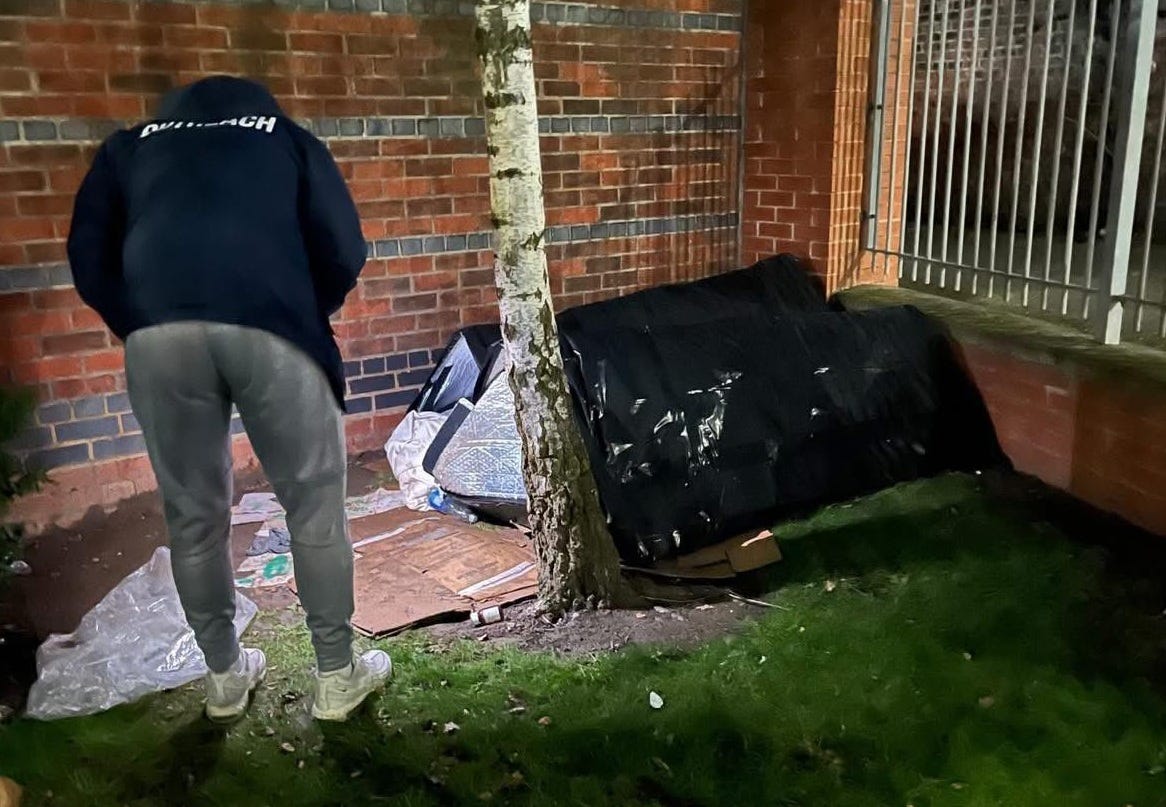
Today’s Teesside Lead takes a look at how Andy Burnham’s pledge to solve homelessness by Christmas looks from the perspective of of a Teesside homeless charity.
£442m has been pledged to address the issue, but we dive into the numbers to see what sort of impact it would make, and where it’s likely to be spent.
In yesterday’s national newsletter for The Lead, editor Leigh Jones wrote about how events of the last fortnight have only shown the rest of the country what Teessiders have had to put up with for years.

If you want to support our work as independent journalists covering the Tees Valley it’s free to sign up for weekly updates straight to your inbox. And since this month it’s two years of The Teesside Lead we’re celebrating with a 20 per cent discount for new paid subscribers on an annual subscription. Click here to get the discount!

Since entering Downing Street, Andy Burnham has put the UK’s homelessness problem at the top of his agenda, announcing a total of £442 million in funding to end rough sleeping and “get everyone in for Christmas”.
In Teesside, where some rates of homelessness are among the highest in the country, it’s welcome news for frontline workers. But as one charity told The Teesside Lead, getting somebody off the streets is only the first step.
“Everyone in for Christmas”
Homelessness is clearly an issue close to Burnham’s heart.
Rough sleeping fell substantially during his time as mayor of Greater Manchester, thanks in part to his A Bed Every Night initiative.
Now, as Burnham takes on his new role as prime minister, he’s pledged to tackle the issue nationally, with an additional £102m investment on top of the initial £340m announced in July.
This will include £8.4m of new money for the Ending Homelessness in Communities Fund, bringing the total to £47m over three years. Of the total £442m pledged, £10m will be spent in the north east - that’s the whole of the north east from the Tees to the Tweed - covering 12 local authority areas.
Under the plans, everyone sleeping rough will be offered a route off the streets this winter, the government says, with emergency accommodation, practical support, and settled homes for people experiencing long-term homelessness.
Teesside-based charity Cornerstones, which operates homeless hubs with dedicated housing pathways in Hartlepool and County Durham, told The Teesside Lead it’s “over the moon” to see the issue back on the political agenda, but as always the devil will be in the detail.
“Any focus on homelessness and housing is a positive, because we know there is a massive need,” says Nicky Morson, the charity’s communications and support lead.
“But what we’re concerned about is that it’s not just a tick-box exercise. We know it’s possible to get everyone off the street, but that doesn’t mean we’ve solved it.”
Morson is referring to the Severe Weather Emergency Protocol (SWEP), under which councils provide emergency shelter to people sleeping rough during extreme weather, and the ‘Everyone In’ initiative introduced during the Covid pandemic.


In March 2020, the government asked councils to bring people sleeping rough, or at risk of doing so, into emergency accommodation. By November, more than 33,000 people had been helped, with more than 23,000 moving on into longer-term accommodation.
But finding lasting homes proved more difficult. Research by Shelter later estimated that more than three-quarters of those initially accommodated had not moved into settled accommodation by February 2021.
“Emergency accommodation and temporary accommodation is a very short fix,” Morson explains.
“With someone who’s entrenched in rough sleeping and has been for many years... they will initially engage, but due to mental health and other issues, keeping them in the property is the problem.
“Where we really need to be investing money is in the infrastructure behind it, the supported housing, the teams who support people in the properties, and finding out what the issues are that have led to homelessness.”
The local picture
Teesside faces some of the highest and fastest-rising homelessness rates in England.
According to the latest government figures, for every 1,000 households in Middlesbrough, almost five (4.86) were assessed as homeless in the first three months of this year — more than two-and-a-half times the national rate of 1.81 per 1,000, and 2.24 across the North East.
The local authority also saw a 365% increase in households owed a statutory homelessness duty between 2018 and 2024 at a huge cost, with £1.29m spent on temporary accommodation in 2023/24.
But homelessness doesn’t exist in isolation. It’s a reflection of much wider deprivation, which has been brought to the fore by the spate of serious violent crimes the region has witnessed over the last two weeks.
Middlesbrough is now England’s second-most deprived local authority by average score, up from fifth in 2019. Of its 90 neighbourhoods, 45 are among the most deprived 10% nationally and 13 are among the most deprived 1%.
Stockton also contains nine wards in the country’s most deprived 10%, with a homeless rate of 2.76 per 1,000. But Hartlepool bucks the trend — despite 42% of its neighbourhoods ranking among the 10% most deprived in England, its homeless rate of 1.79 is below the national average.
A path back to independent living
Cornerstones has provided frontline support for those affected by homelessness for more than 20 years through its housing pathway, which begins with initial engagement through community hubs and offers temporary accommodation and other support services — including Bob the therapy dog.

Morson says this ongoing support is crucial to help people live independently again in the long-term.