


In this week’s edition I take a look at the news of more devolution and how that will affect the Tees Valley. Ben Houchen has promised to use his new powers to put money directly into Teessiders’ pockets, but is this something he can do? And if it is, what does that mean?
If you want to support our work in original journalism and investigations at The Teesside Lead, the easiest way is to sign up for free to get the newsletter delivered straight to you each week.
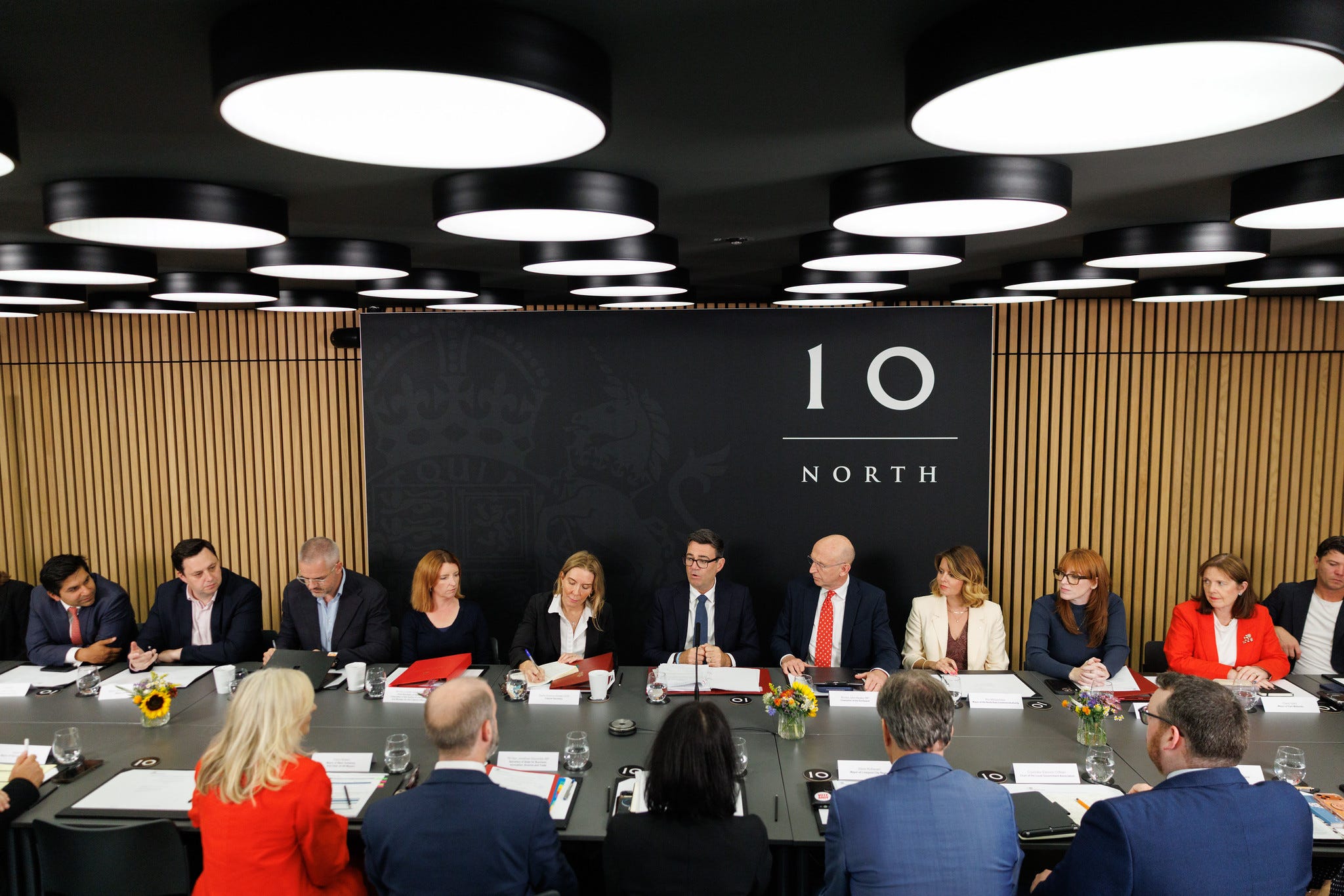
Wasting no time after getting the keys to No 10, new prime minister Andy Burnham has been on a policy blitz on his first fortnight in office. One of his latest announcements is one he claims would be the “biggest transfer of power in a generation”. But an intervention by Tees Valley mayor Ben Houchen has left the former Greater Manchester mayor saying, “no, not like that, actually”.
Full details will be published in a government white paper this autumn, but there’s plenty to chew over in what’s been announced so far.
There are countless studies over the last decade which show how the UK is unique in how centralised its governance is. It’s Burnham’s belief that this is a cause of regional inequality.
To address this, he wants to give devolved mayors additional powers to raise money. In particular, last week, the government announced plans to give mayors the power to retain a share of business rates raised from next spring, and to retain a portion of income tax from April 2028.
In the Tees Valley a fledgling model of business rate retention is already in place, where Redcar and Cleveland Council gets half of business rates at Teesworks, while the South Tees Development Corporation (STDC) gets the other half. Slow progress on the site means there’s only one tenant - SeAH Wind - and they’re yet to start paying business rates. It’s left a £30m hole in Redcar Council’s predicted income over the medium term.
But on the subject of retaining income tax, this announcement is something that is uncharted territory for English mayors.
Straight out of the gates, Lord Houchen said he would use the revenue raised by income tax in the Tees Valley to give rebates to all. Chancellor of the Duchy of Lancaster, Louise Haigh, said that’s “not possible at the moment.”
Adding: “That’s not how these powers and resources are intended to be used.”
I’m told Andy Burnham is not best pleased at this intervention.
But can Ben Houchen actually do this?